
Screen-Free Bedtime: What Actually Works When You Have Tried Everything
The problem is not willpower. It is the replacement. Here is the one that sticks.
The best alternative to screens before bed is audio. Not because other screen-free activities are bad — but because audio is the only one that works in the dark, requires no parent energy, and actively calms your child at the exact moment they need to wind down.
If you have tried going screen-free and it did not stick, the problem was probably the replacement, not the willpower.
Why most screen-free attempts fail
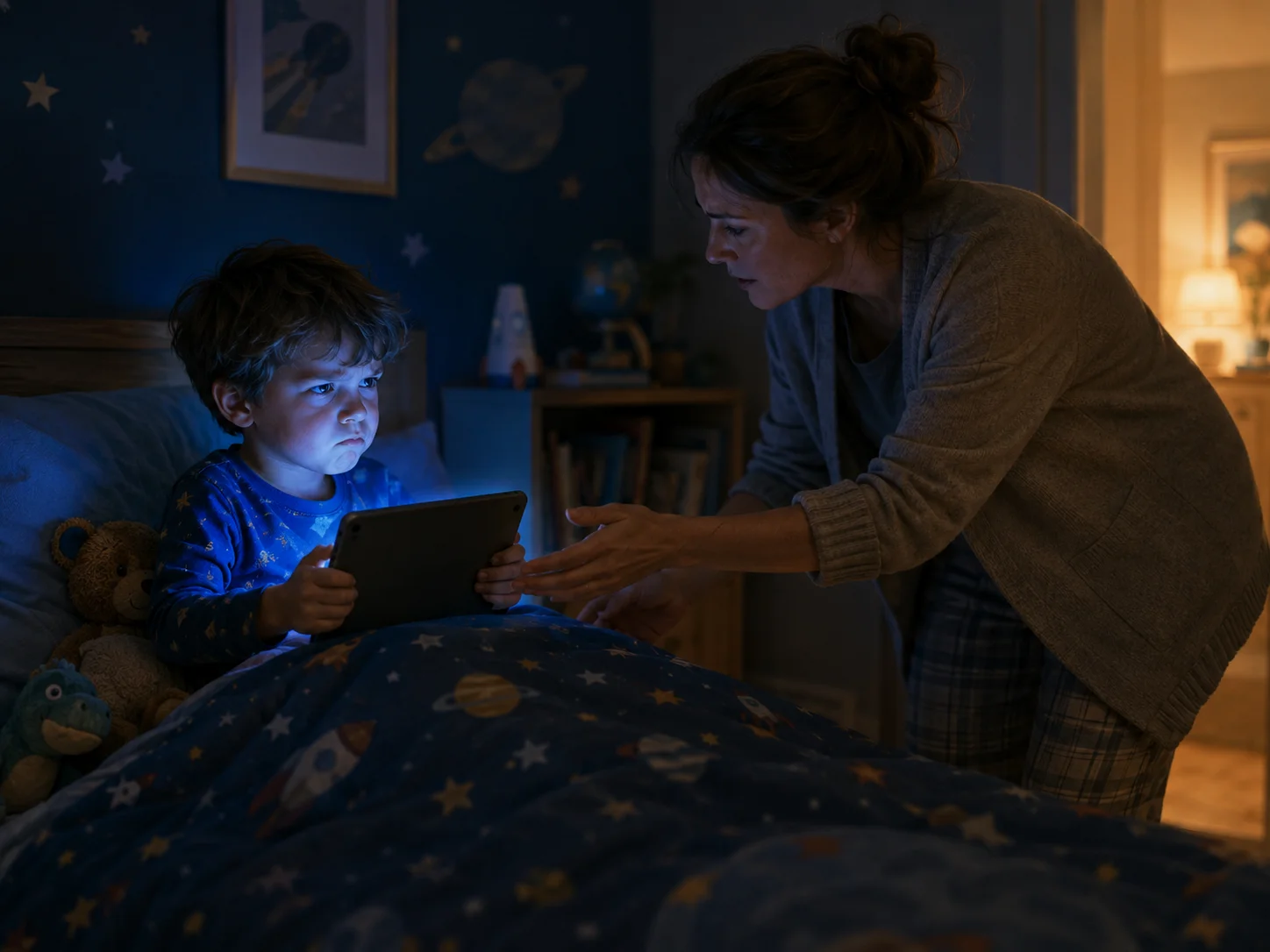
You declare no screens after dinner. Day three, your child is bored and you are exhausted and the tablet reappears because at least it buys you twenty minutes of peace.
Screens are not just a habit — they are a solution. Your child needs stimulation, you need a break. Any replacement has to solve both simultaneously or it will not last.
Audio storytelling: the strongest replacement
A 2024 clinical trial from the University of Bath (JAMA Pediatrics) gave families calm activities to replace screens. After seven weeks, children fell asleep faster and slept more soundly. Audio content was one of the most effective components.
Audio stories solve both sides. For the child: stimulation, imagination, engagement. For the parent: zero effort, zero preparation. You press play. The story does the rest. Eyes closed, body still.
Unlike a screen, an audio story does not end with your child wired. It ends with them drowsy. The story tapers. That is the difference between content designed for engagement and content designed for sleep.
Other screen-free activities, ranked for bedtime
Drawing or colouring. Good for the 30-60 minute window before the routine. Gets children quiet. But requires light, so it is not a lights-off activity.
Gentle conversation. Five minutes of what happened today is powerful. But keep it to one question and let the audio story close the evening.
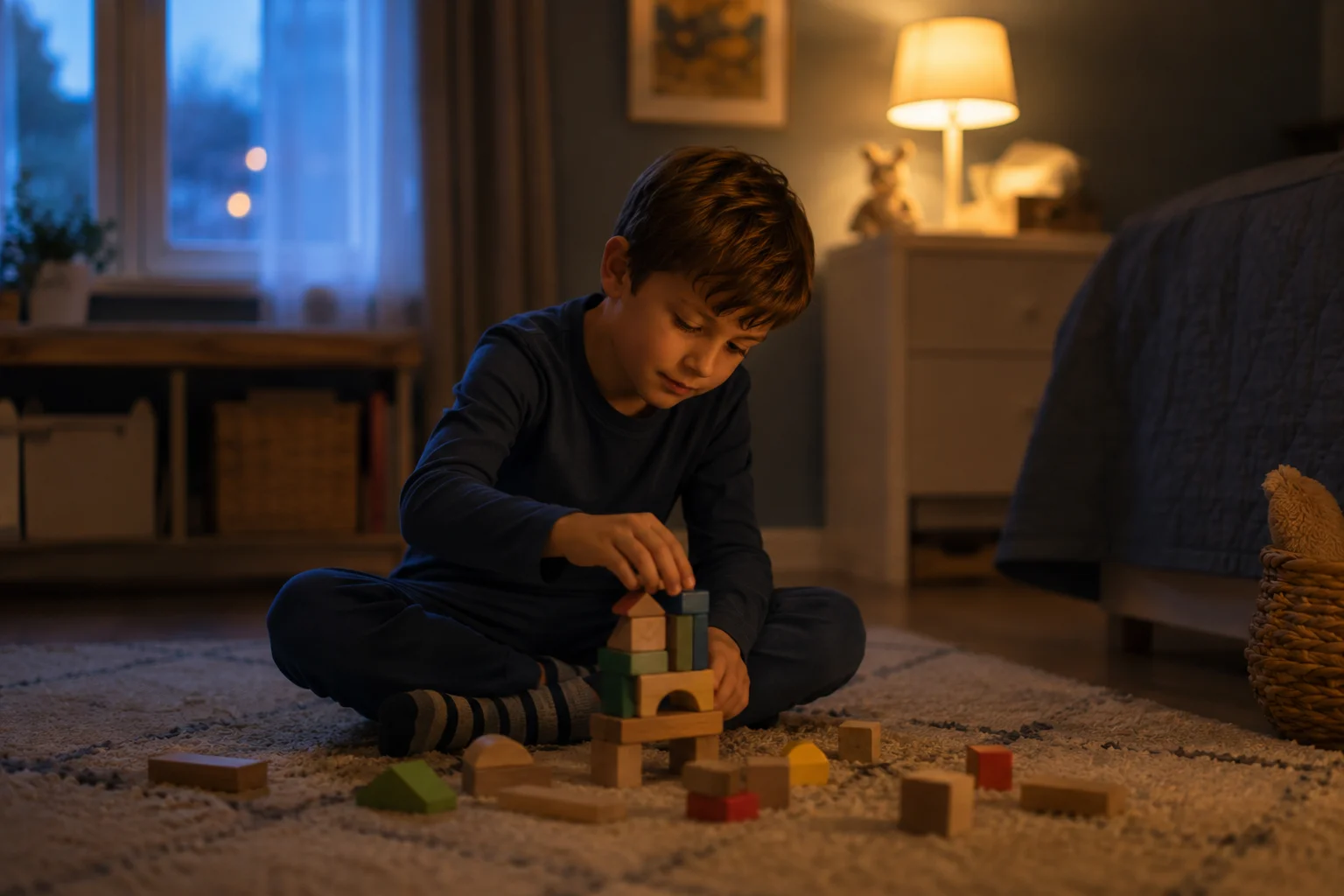
Puzzles and building. Engage the problem-solving brain, which is not what you want right before sleep. Excellent after school, less useful in the final hour.
Reading aloud. Wonderful when you have energy. But you do not have to do it every night.
How to make the switch without a battle
Step 1: Let your child choose a story category. The choice gives them ownership.
Step 2: Play the first story alongside the screen, not instead of it. No pressure, no removal of the old habit yet.
Step 3: After two or three nights, move the story into the dark. Most children prefer it. Darkness plus voice creates a private, immersive world.
Step 4: The screen naturally drops out. You did not ban it. Your child chose something they prefer. That is sustainable.
The printable activity sheet
Each FireflyNook story comes with a fill-in-the-blanks worksheet. Your child listens at night, fills in the sheet the next morning — retelling the story, inventing endings, practising writing. Screen-free at both ends.
Try this tonight
Turn off screens 30 minutes before bedtime. Let your child draw or play quietly. Then in bed, play a short audio story in the dark. Do not remove the screen permanently. Just add the story and see what shifts.
Get the free coloring printable pack
Subscribe to the free FireflyNook newsletter and we will email you this printable pack to use tonight. Free - and you can unsubscribe anytime.
Frequently asked questions
How long before bed should I turn off screens?
At least 30 minutes. Research shows 60 is ideal, but 30 is a realistic start. Replace the screen with something calming.
Will my child actually listen without visuals?
Almost always yes. Children used to screens may take 2–3 nights to adjust, but most prefer audio at bedtime once tried.
Is background music as good as an audio story?
Music helps atmosphere but does not hold attention. A story occupies the part of the brain that would otherwise resist sleep.