
You Do Not Have to Read Aloud Every Night. Here Is What to Do Instead.
The guilt-free reframe for tired parents who still want their child to have a story at bedtime.
You do not have to read aloud to your child every night to be a good parent. You need to give them a story. Those are not the same thing. Reading aloud is one delivery method. An audio story is another. Both expose your child to vocabulary, narrative and calming rhythm. Only one requires you to have energy left at 8pm.
If you are carrying guilt about the nights you skip, this is the reframe that changes everything.
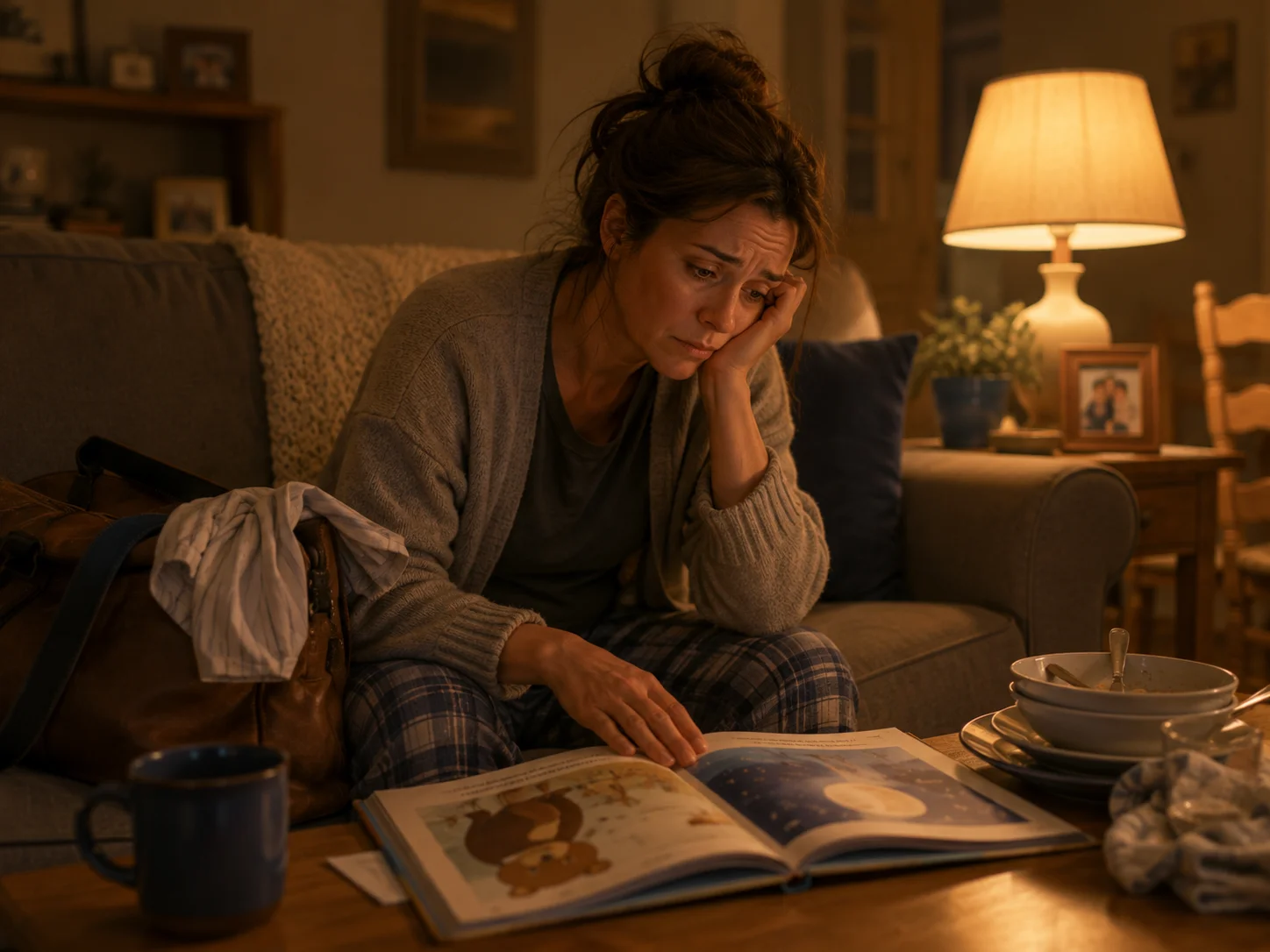
The guilt is real — and misplaced
Every parenting article says: Read to your child every day. And they are right — regular story exposure builds literacy. But somewhere along the way, give your child stories became you personally must read aloud, with expression, every single night.
That is not what the research says. Children need regular exposure to narrative language. The voice does not have to be yours, and you do not have to be awake while it happens.
What you are actually too tired for
You are not too tired to care. You are too tired to perform. Reading aloud is a performance: voices, page-turning, holding a book at an angle, sounding interested in a story you have read forty-seven times.
There is nothing wrong with that. It is not laziness. It is the reality of parenting while working, cooking, cleaning, and holding your own life together. The problem is not your commitment. It is the model. Change the model.
The alternative that is not a compromise
An audio story is not a lesser version of reading aloud. It is a different version — and in some ways, better for bedtime.
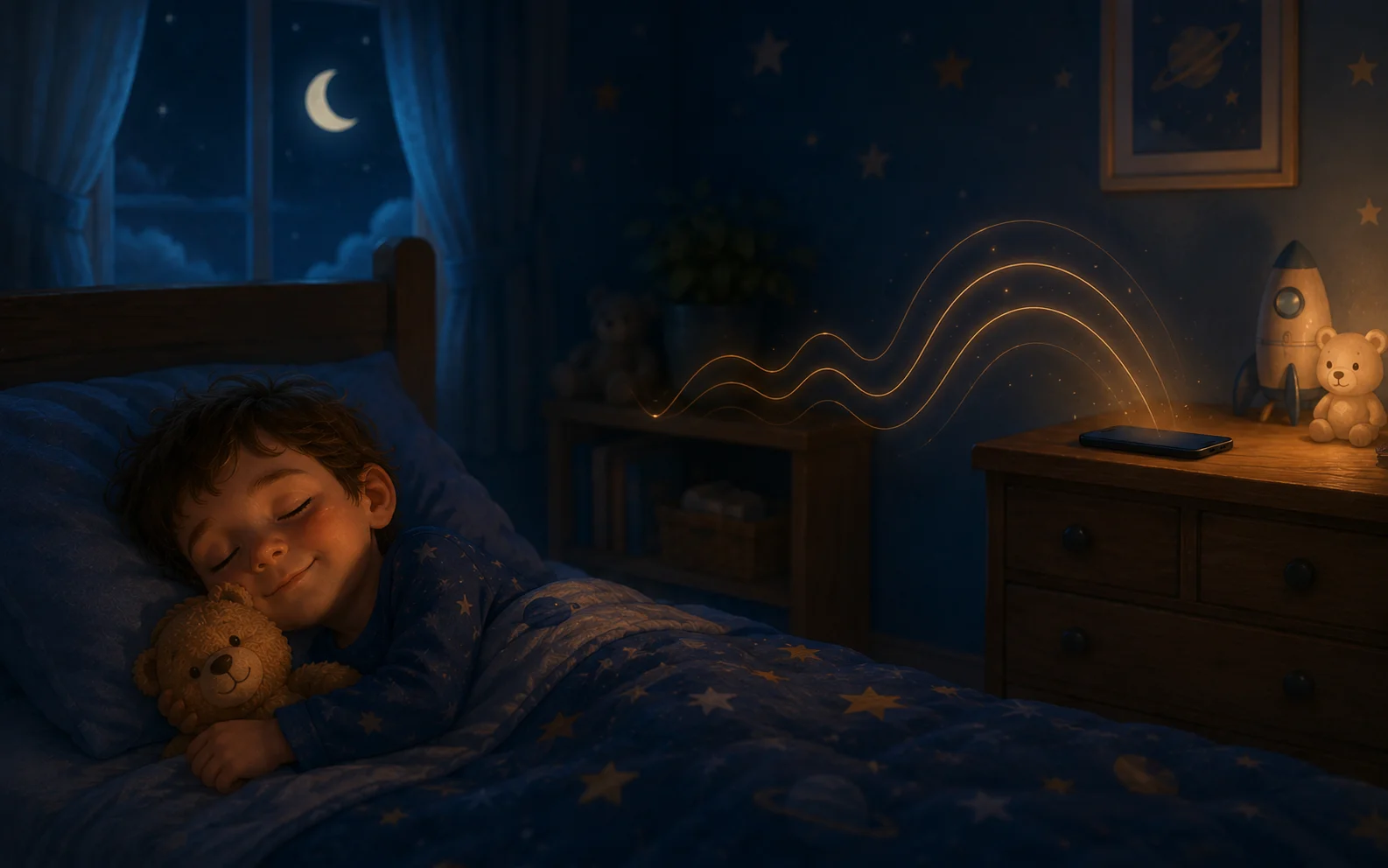
It works in the dark. Reading aloud requires light, which suppresses melatonin. Audio plays in the dark, supporting natural sleep signals.
It is consistent. Your reading varies by energy level. An audio story delivers the same quality every night.
It ends cleanly. A book can become one more page. An audio story has a set length — 5, 10, or 15 minutes — and when it is done, it is done.
It frees you up. Sit nearby and rest, or step out and have ten minutes to yourself. Both valid. Both guilt-free.
But what about the bonding?
The connection happens in the five minutes before the story, not during it. The moment you sit on their bed and ask how was today — that is the connection. The story is the wind-down.
On nights when you have energy, read aloud. It is wonderful. When you do not, press play. Your child still gets a story. Everyone sleeps.
What your child gets with FireflyNook
A new story arrives by email every day. Choose 5, 10 or 15 minutes. Choose a category: animals, family life, kindness, manners, adventure. Your child listens at bedtime.
The next morning: a read-along text (on screen or printed) and a fill-in-the-blanks activity sheet. They retell the story, invent endings, practise writing. Listen at night, create in the morning. Screen-free at both ends.
Tonight's plan
On a night when you are exhausted, do not force the book. Sit with your child for five minutes. Ask one question. Then play an audio story in the dark. The guilt lifts when you realise your child got a story, fell asleep calmly, and you did not have to white-knuckle through it.
Get the free coloring printable pack
Subscribe to the free FireflyNook newsletter and we will email you this printable pack to use tonight. Free - and you can unsubscribe anytime.
Frequently asked questions
Is it bad if I do not read to my child every night?
No. What matters is consistent story exposure. An audio story every night is better than reading aloud three times a week and skipping the rest.
Will my child miss out on literacy skills?
Audio stories build vocabulary and comprehension the same way. Pair with the printable read-along text for visual literacy practice.
When should I read aloud versus play audio?
Read aloud when you have energy. Audio when you do not. A mix of both is healthy and sustainable.