
Screen-Free Bedtime Routine for Kids: A Complete Guide for Tired Parents
A practical, 20-minute routine that replaces screens with calm — no preparation, no energy, no guilt.
A screen-free bedtime routine does not have to be complicated. It takes about 20 minutes, no preparation, and works even on the busiest school nights. The key is replacing the screen with something calmer your child actually enjoys — an audio story: no light, no negotiation, no energy required from you.
If your evenings end with a tablet, a meltdown, or both, this guide covers what to change, why it works, and how to start tonight.
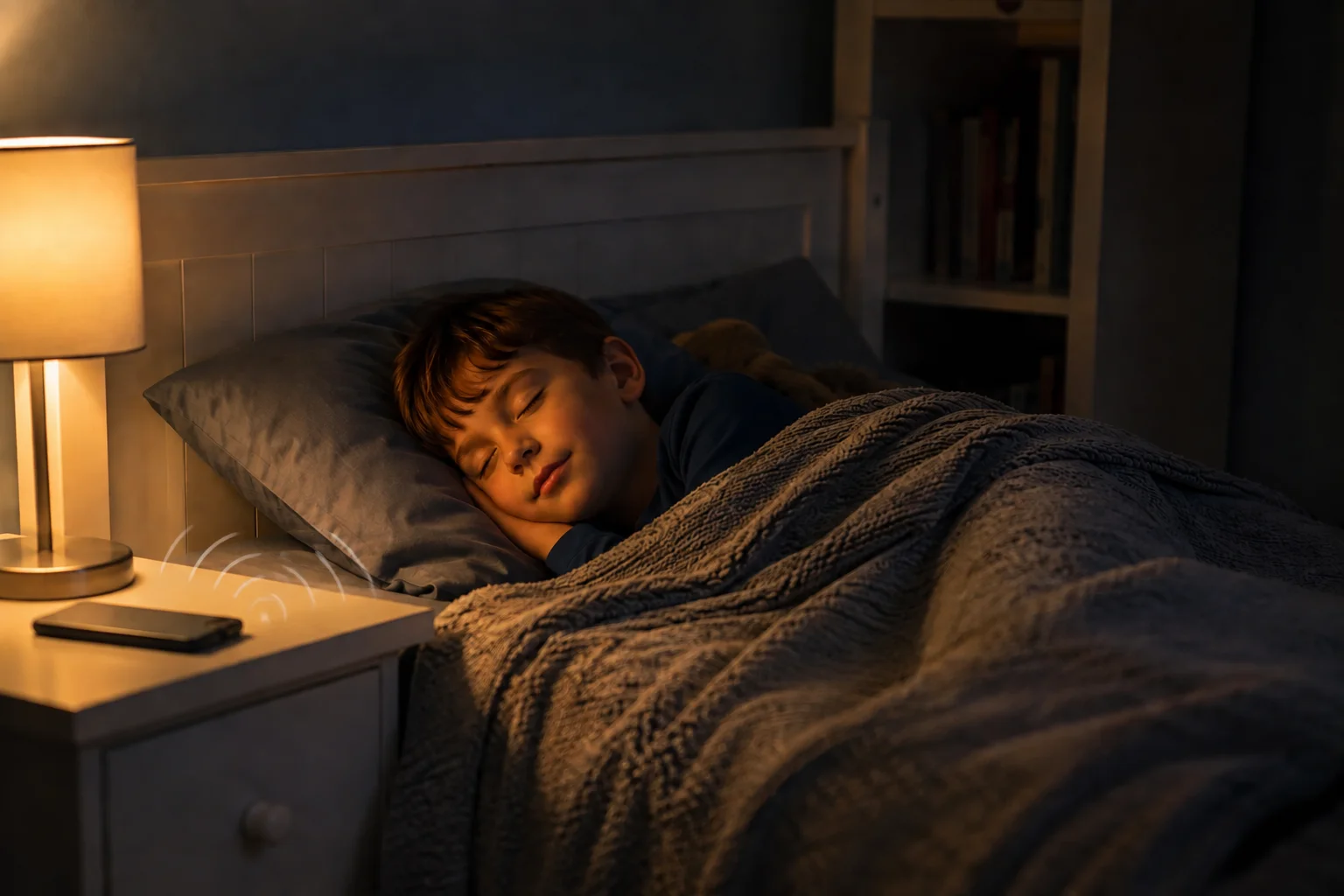
Why screens before bed make everything harder
A 2024 University of Bath study (JAMA Pediatrics) found children who swapped screens for calm activities before bed fell asleep faster and slept more soundly. The screen keeps the brain in doing mode when it needs to wind down.
A six-year-old watching fast cartoons is neurologically wired up. Switch it off and say time for bed — their nervous system has not caught up. The fix is not willpower. It is giving them something calming. Audio stories work because: eyes closed, body still, imagination engaged.
What actually works instead of screens?
| Activity | Calms nervous system? | Parent energy? | Works in the dark? |
|---|---|---|---|
| Audio story | Yes — actively | None — press play | Yes |
| Reading aloud | Yes | High | No |
| Drawing | Moderate | Low | No |
| YouTube/tablet | No — stimulates | None | Yes, but harmful |
Audio storytelling is the only activity that calms, requires no energy, and works in the dark.
The 20-minute screen-free bedtime routine
Minutes 1-5: Tidy and transition. Pyjamas, teeth, toilet. Keep it matter-of-fact. A two-minute warning before starting helps resistant children.
Minutes 5-10: Quiet connection. Sit on the bed. Ask one question: What was the best part of today? Five minutes of full attention. This prevents the stalling that eats far more time later. Children fight bedtime when they feel disconnected — this step prevents that.
Minutes 10-20: Audio story in the dark. Lights off, child in bed. Open the story, tap play, phone face-down. A 5, 10 or 15-minute story depending on the night. When it ends, your child is calm and drowsy.
That is it. No elaborate ritual. Twenty minutes, same sequence, every night.
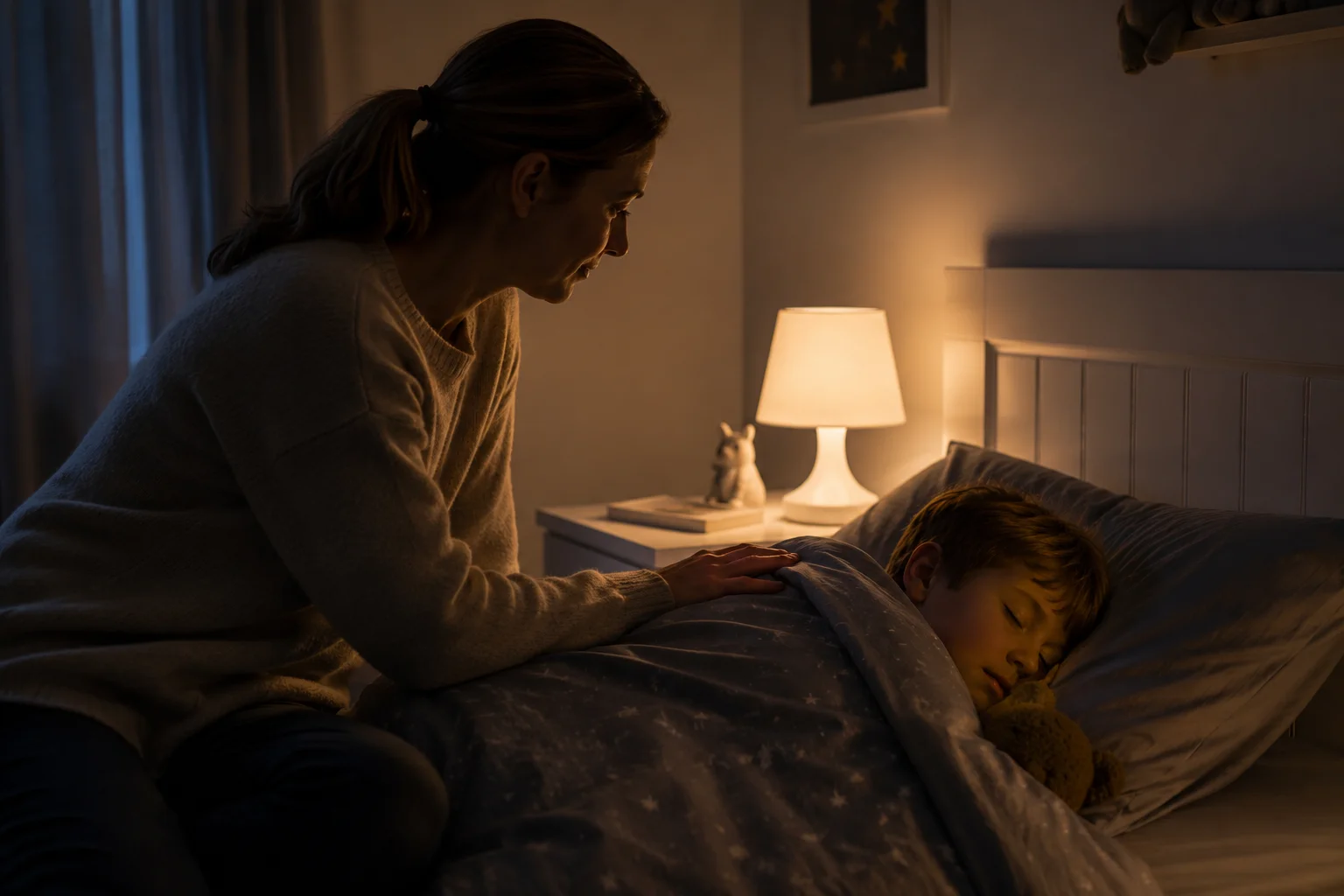
What if my child fights every step?
Bedtime resistance is usually one of three things: overtired, under-connected, or too many decision points. We go deeper into why children fight bedtime in a separate guide. Short version: reduce choices, increase connection, give them something to look forward to.
If your child says I do not want a story, try letting them choose the category — animals, family adventures, kindness. Choice within structure is the balance that works.
When you are too exhausted to read aloud
Some nights you simply cannot read with enthusiasm. That is not failure — it is a design problem. The honest alternative to reading aloud is switching the delivery. An audio story gives the same vocabulary, narrative and calming ritual — without requiring you to perform.
Quick guides for specific situations
- Why your child fights bedtime — the connection and FOMO angle
- Quick routine for working parents — when you get home at 6:30
- Screen-free alternatives — what replaces the tablet
- Getting a 5-year-old to sleep — when nothing sticks
- Too tired to read aloud — the reframe that changes everything
- Bedtime for different-aged siblings — one routine, two ages
One change to try tonight
Tonight, turn off screens 30 minutes before bedtime. When your child is in bed, play a short audio story. If they fall asleep faster or resist less — you have found the lever.
FireflyNook delivers a new bedtime story to your email every day — audio, text to read along, and a printable activity sheet. Choose 5, 10 or 15 minutes. Pick a category. Press play.
Get the free coloring printable pack
Subscribe to the free FireflyNook newsletter and we will email you this printable pack to use tonight. Free - and you can unsubscribe anytime.
Frequently asked questions
How long should a bedtime routine be for a 5-year-old?
About 20 minutes works well for ages 3-10: a short transition, quiet connection, and a calming activity like an audio story.
Are audio stories as good as reading aloud?
They build vocabulary, comprehension and narrative skills the same way — and are significantly better than screens. On nights when you have energy, read aloud. When you do not, an audio story is a strong, guilt-free alternative.
My child will not listen without a screen. What do I do?
Let them choose the story category. Turn the lights off and sit with them for the first few nights. Most children adjust within a week once they stop expecting visuals.